

Two museums, two worlds
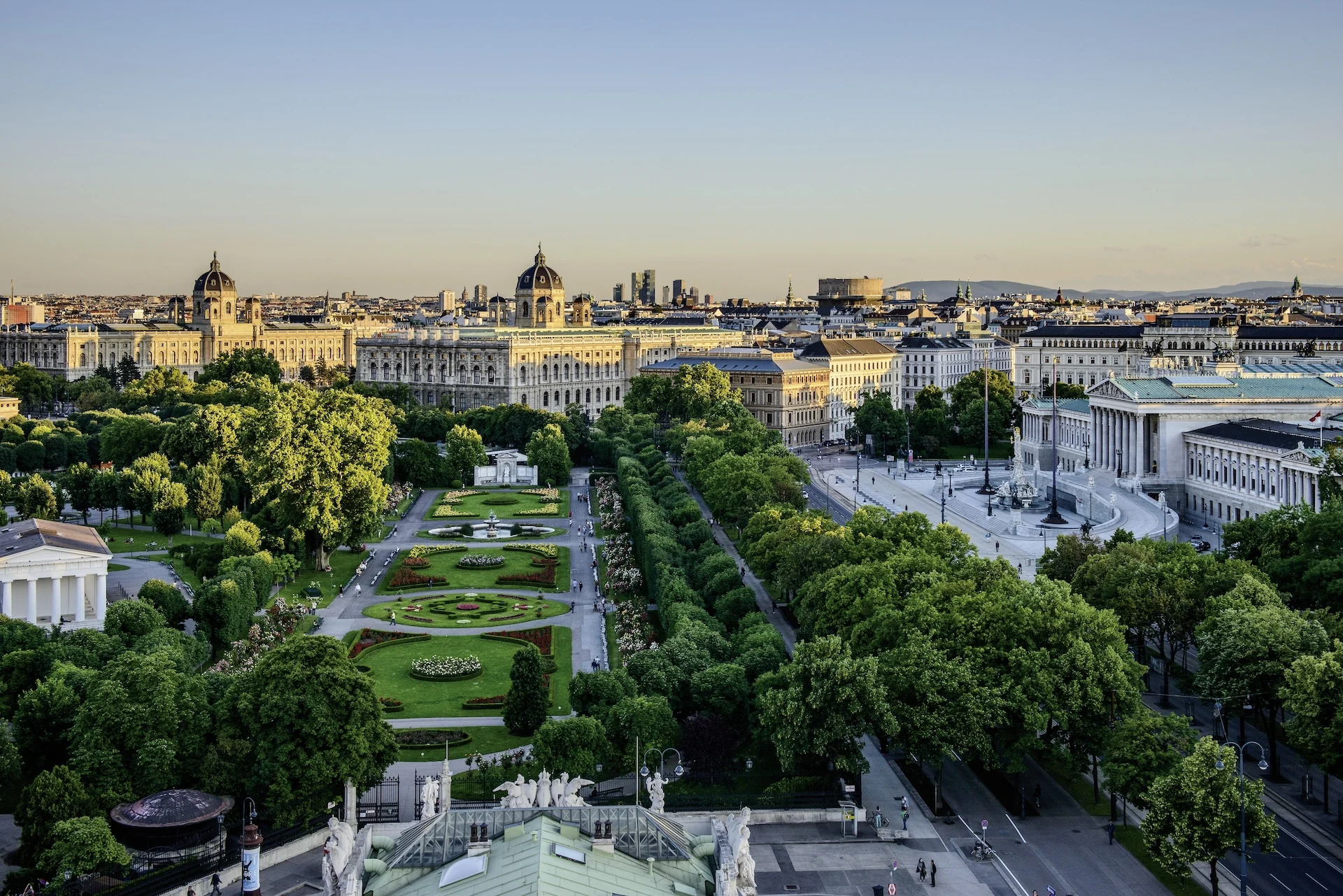
On Maria-Theresien-Platz, you face a pleasant choice. On one side stands the Kunsthistorisches Museum, on the other the Natural History Museum. Both house some of Vienna’s great collections, yet they ask very different questions of the world. One tells stories of images, materials and human imagination. The other leads into nature, the history of the Earth and traces of early life. For a museum day, this proximity is a gift. You do not, however, need to walk through both buildings in full to bring them into conversation.
Even before entering, take in the square as a whole. The two buildings give a museum visit a generous setting. Let the façade make its impression for a moment before turning to the collection. Then follow your curiosity: would you like to stand before paintings, compare colours and discover stories? Or are you more interested today in forms, natural phenomena and vast stretches of time? A considered choice makes the day more personal than pursuing the longest possible list of famous objects.
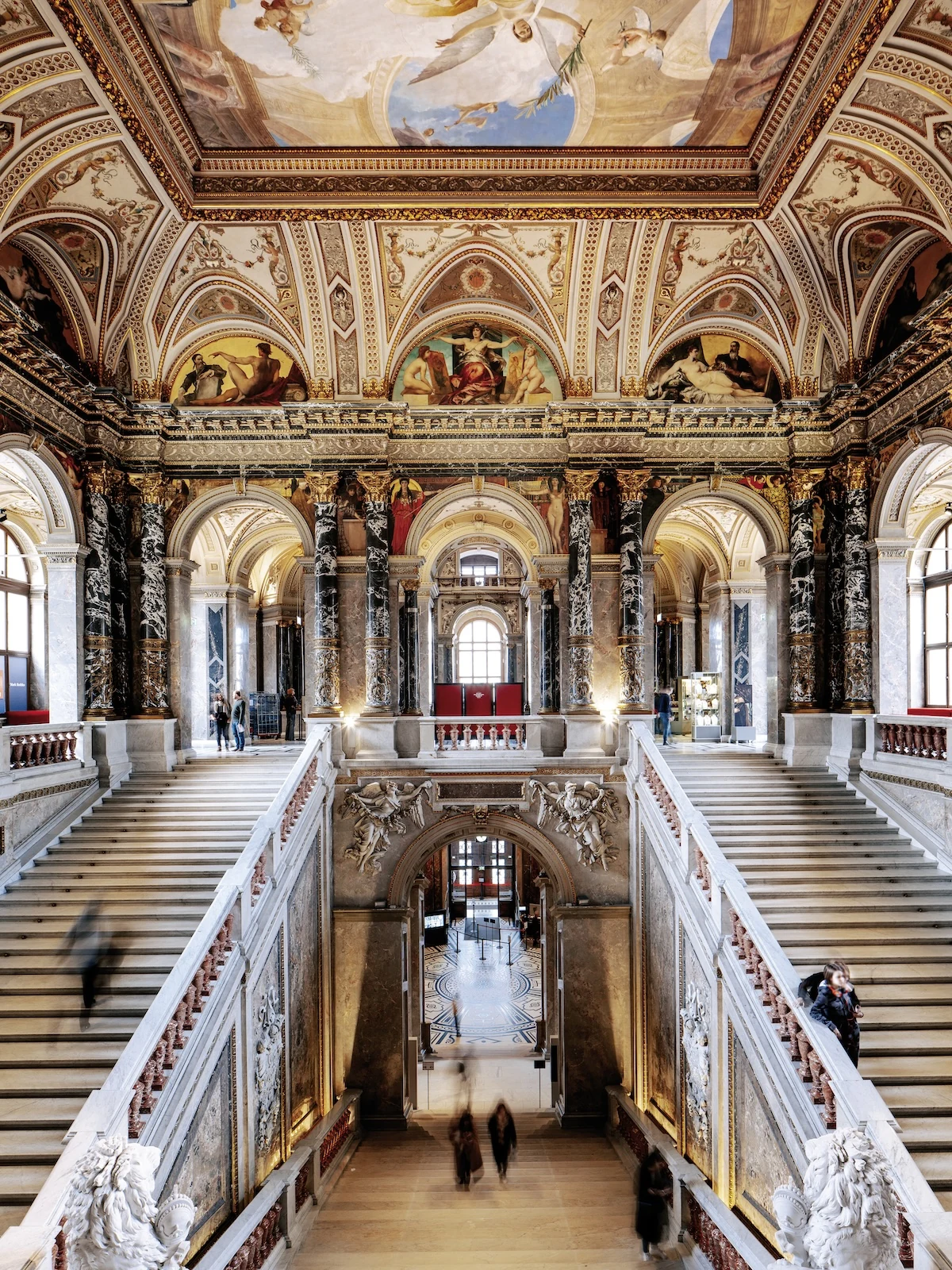
At the Kunsthistorisches Museum, the Picture Gallery can be a good place to begin. The collection spans the early Renaissance to the 18th century and includes works by Bruegel, Rubens, Rembrandt and Vermeer. First, choose a painting you would like to stay with. What do you notice immediately, and what only later? How is your eye guided? In such a rich collection, looking slowly is a useful counterbalance. A single work can remain in the memory longer than an entire gallery passed through too quickly.
If you prefer to approach art history through objects rather than paintings, choose the Kunstkammer. Precious materials, craft and the ideas of earlier collectors come together here in a different kind of storytelling. Benvenuto Cellini’s Saliera is among the well-known works. It offers a good reason to consider the difference between a useful object and a showpiece. You need not know everything before visiting. Often, a simple question is enough: why was this particular object preserved, admired and passed on?
At the Natural History Museum, the scale changes. Opened in 1889, it brings its historic museum architecture together with collections covering very different areas of nature. Meteorites, dinosaur skeletons and the Venus of Willendorf are among its familiar attractions. The small figure was found in Willendorf in 1908 and is displayed in the Venus Cabinet. After looking at large paintings, you encounter an appealing contrast: significance does not depend on size. A small object can deserve as long a look as a monumental painting.
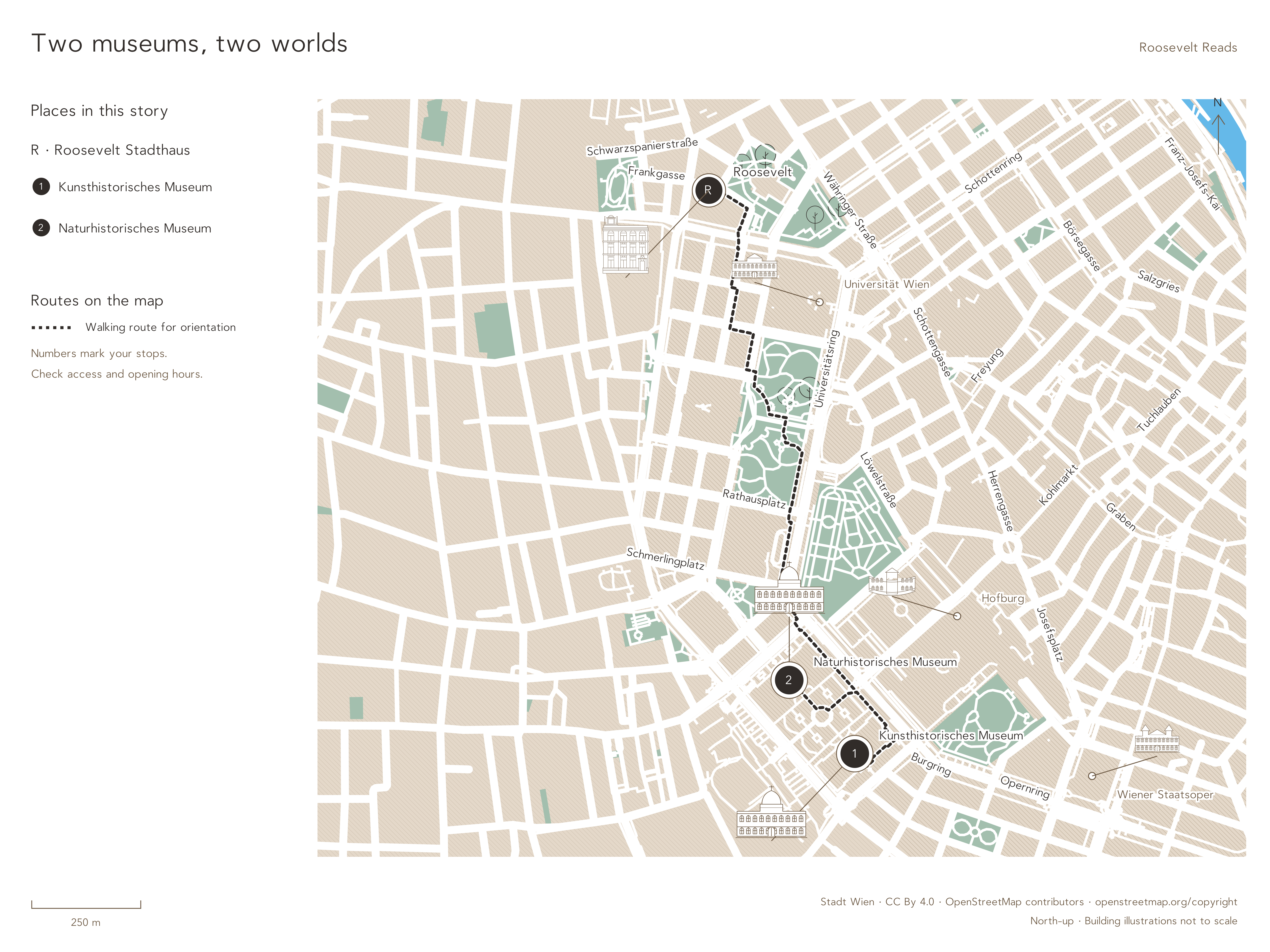
We suggest taking your time rather than racing through both buildings. Choose one collection as the focus of your first visit and leave the second part open. Afterwards, a look at the museum opposite may be enough. Or that may be the moment when you feel like returning for another visit. Check exhibitions, tickets and access directly with the museums; individual areas may be organised differently from the permanent collections. On the map, the two destinations sit close together. In your mind, there can happily be worlds between them.
At a glance
The Kunsthistorisches Museum and Natural History Museum stand opposite one another. Choose a collection to focus on rather than planning to see both museums in full. Check exhibitions and visitor information directly with the museums.
For your visit: Kunsthistorisches Museum · the Natural History Museum.
Discover more: Discover Vienna · More Roosevelt Reads.


