

Vienna becomes modern
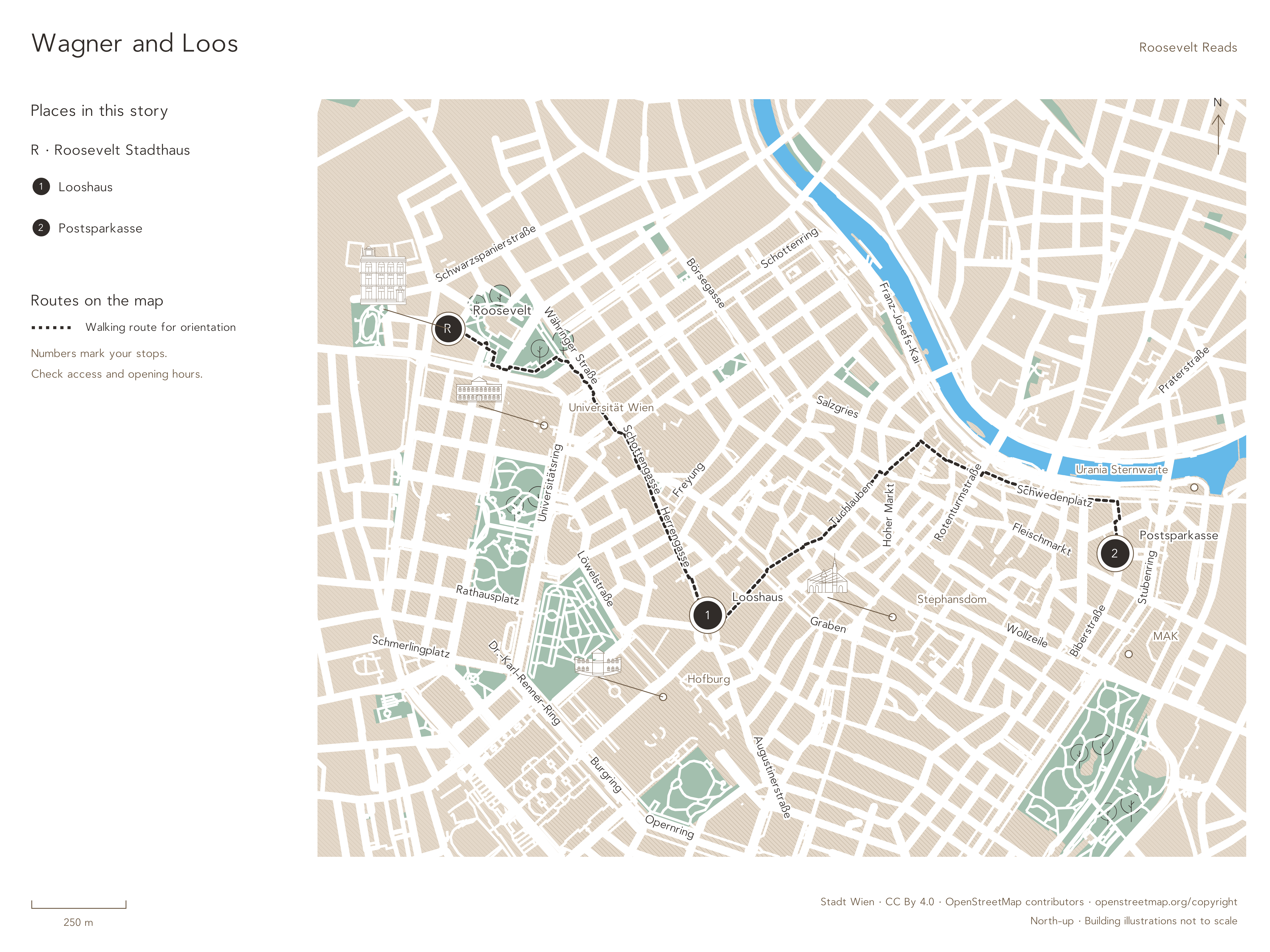
Vienna is more than a city of splendid historic façades. It is also a good place to see how architecture breaks with familiar expectations. Two buildings make this change particularly clear: the Looshaus on Michaelerplatz and Otto Wagner’s Postsparkasse on Georg-Coch-Platz. This walk links them through the city centre. It requires neither access to interiors nor specialist knowledge. Simply look closely and consider what a building wishes to show, and what it deliberately leaves out.
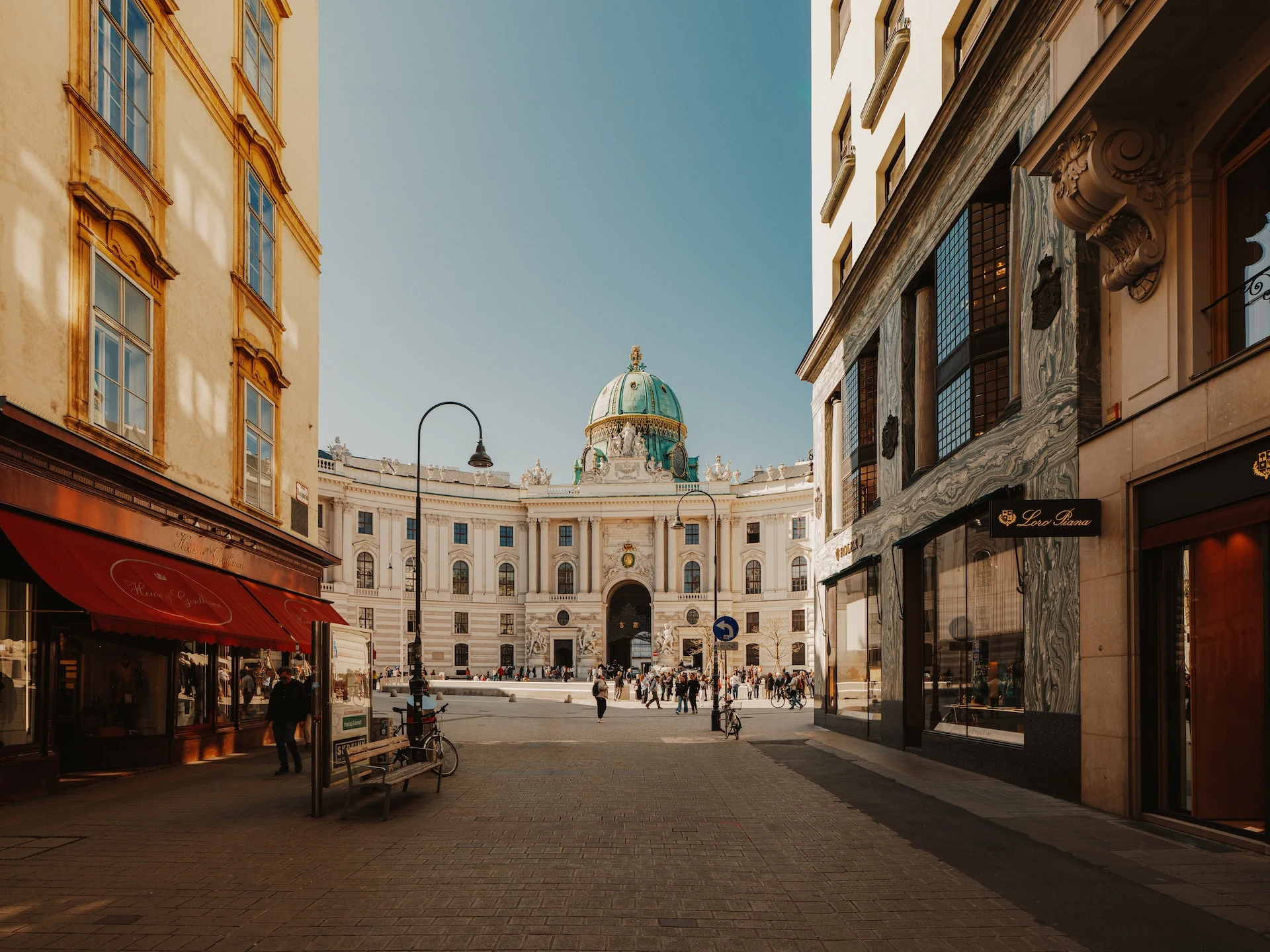
Begin at Michaelerplatz. The Looshaus stands in surroundings where grandeur is very visible. That makes it worth looking at the square before the individual building. Adolf Loos chose fine materials and an approach to design that differed from the decorative façades around it. The building cannot readily be reduced to the word ‘simplicity’. More interesting is the distinction between materials, structure and ornament. What feels precious without drawing attention through a wealth of decoration?
Stay at a distance for a moment, then move closer where the public pavement allows. From further away, you can see the order of the façade; close up, surfaces and transitions become more important. This small exercise often changes the way you look at other buildings. You begin to notice the arrangement of windows rather than merely counting them. You see how a base supports the upper part and how different materials respond to one another. The walk can happily begin with a single, longer pause before the route continues.
Continue via Kohlmarkt and Graben to Stephansplatz, then towards Wollzeile and Stubenring. This is a suggested city walk rather than the shortest route. Many other impressions appear along the way. Let them in without losing the original thread. If you wish, ask the same question of any façade: does its effect come from materials, proportions or decoration? The walk between the two principal stops then becomes more than a way of getting from one to the other.
The Postsparkasse was built to Otto Wagner’s designs between 1904 and 1912. Its setting on Georg-Coch-Platz gives you a chance to see the building in its surroundings. After the Looshaus, it offers a second answer to the question of modern architecture. Instead of treating the two buildings as equivalents too quickly, notice their differences. How are surfaces ordered? Which details stand out? How does the façade relate to the square in front? A second, careful look is often more revealing than assigning a style at first glance.
This Read focuses on exterior views. Interiors, events and exhibitions are additional possibilities and should be planned using current visitor information. The map marks the two buildings as fixed points. You can lengthen or shorten the route between them according to your interests. At the end, you may take away fewer dates than expected, but a new awareness of surfaces, lines and subtle differences. That suits Vienna: the city reveals its history in grand gestures and in places where architecture deliberately holds back.
At a glance
Looshaus on Michaelerplatz → city centre → Postsparkasse on Georg-Coch-Platz. The focus is on exterior views visible from public spaces. Let materials, the arrangement of façades and details guide your walk.
For your visit: Discover architecture.
Discover more: Discover Vienna · More Roosevelt Reads.


