

Reading the Ringstraße
You can walk along the Ringstraße and admire its buildings. The route becomes more intriguing when you read it as a sequence of ideas: how did a city reinventing itself want to look? Which past did it choose for its future? From the Roosevelt, this walk begins almost outside the door. The Votivkirche opens the route, followed by the university, Rathaus and Parliament. It is a manageable stretch of the great Ringstraße, yet it places very different visions of Vienna side by side.
The Ringstraße was formally opened in 1865. It was far from finished; its creation continued over decades. The new boulevard gave both public institutions and private palaces a prestigious setting. The differences between its buildings are therefore deliberate. Historicism drew on earlier architectural styles and recombined them. Look at windows, columns, towers and the rhythms of façades, and you will discover architecture intended to convey meaning through familiar forms. A walk becomes a small exercise in looking closely.
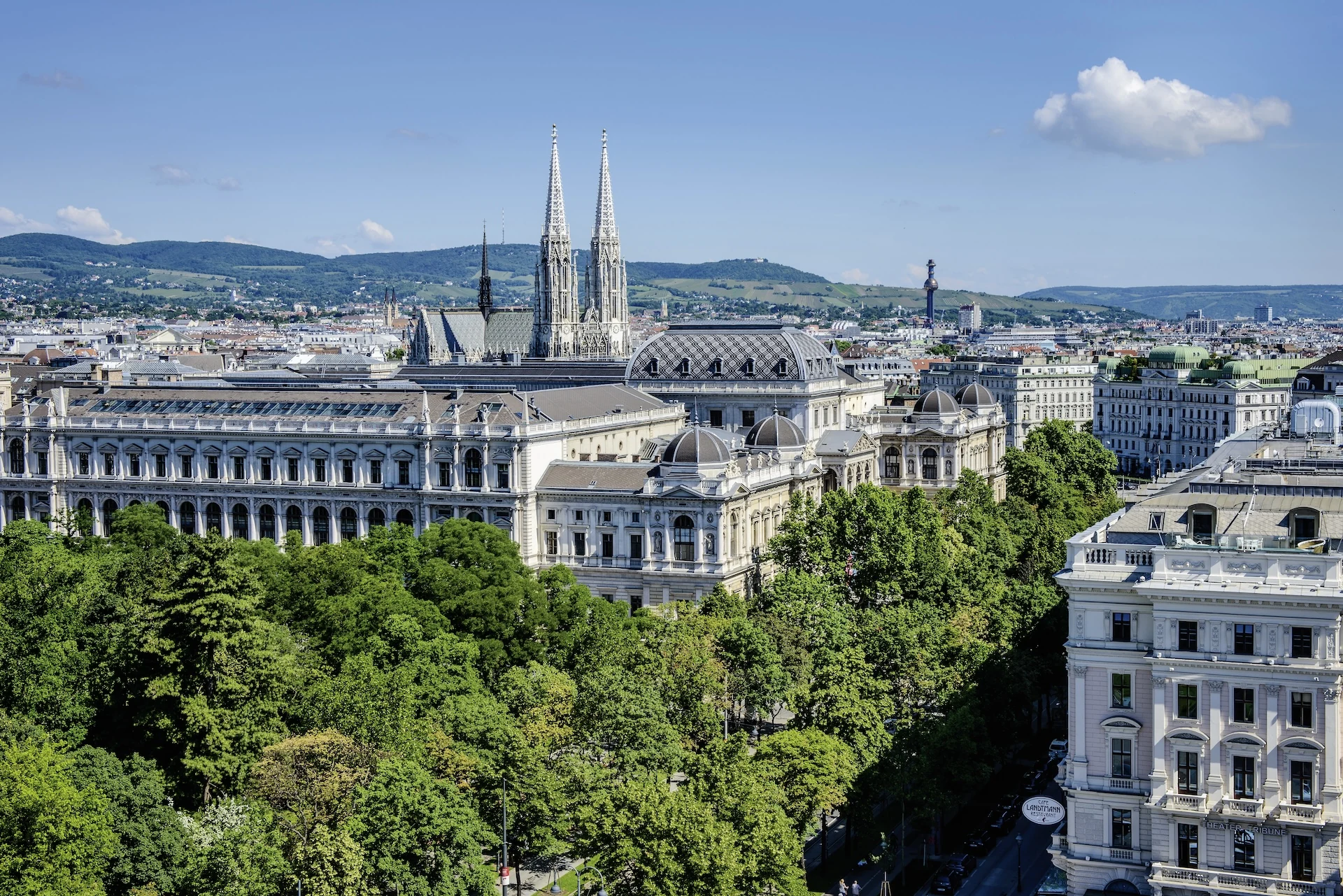
Begin at the Votivkirche. Its neo-Gothic forms show how consciously the 19th century looked back to earlier eras. Before moving on, change your viewpoint: first take in the towers, then the divisions of the façade, and finally its relationship to the open space in front. The next stretch leads to the University of Vienna on the Ring. Here, the Renaissance provides the model. Two neighbouring buildings, two different historical languages: already the boulevard becomes more than a row of beautiful buildings.
At the Rathaus, the contrast becomes clearer still. Its forms, inspired by Flemish Gothic, face the neo-Baroque Burgtheater. Find a place where both sides are visible and let your eye move between them. This is no art history examination. Simply notice the differences: the rising silhouette on one side, the grand theatrical presence on the other. Follow the existing footpaths and controlled crossings along the route. The Ring is also a major traffic artery; pause in a suitable spot to look around.
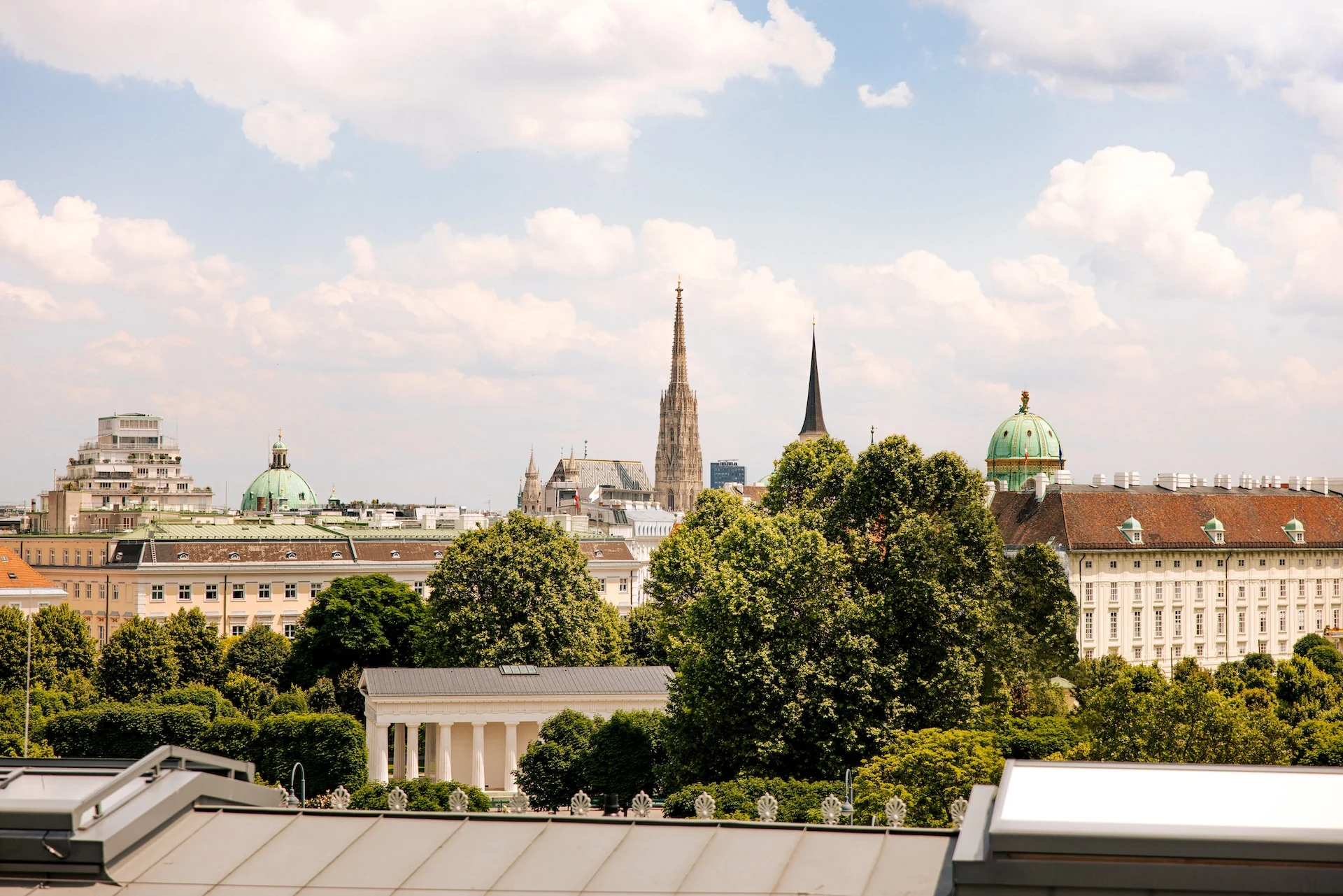
At Parliament, the atmosphere changes again. Theophil Hansen drew on ancient Greece. The columns and horizontal order feel different from the Rathaus’s array of towers. This gives the walk a clear ending: you have seen several sights and gained an understanding of how architecture can express different purposes and self-images. If you would like to keep walking, continue into the Volksgarten. If you prefer to turn back, return along the same route with a more attentive eye; familiar façades often reveal new relationships from the opposite direction.
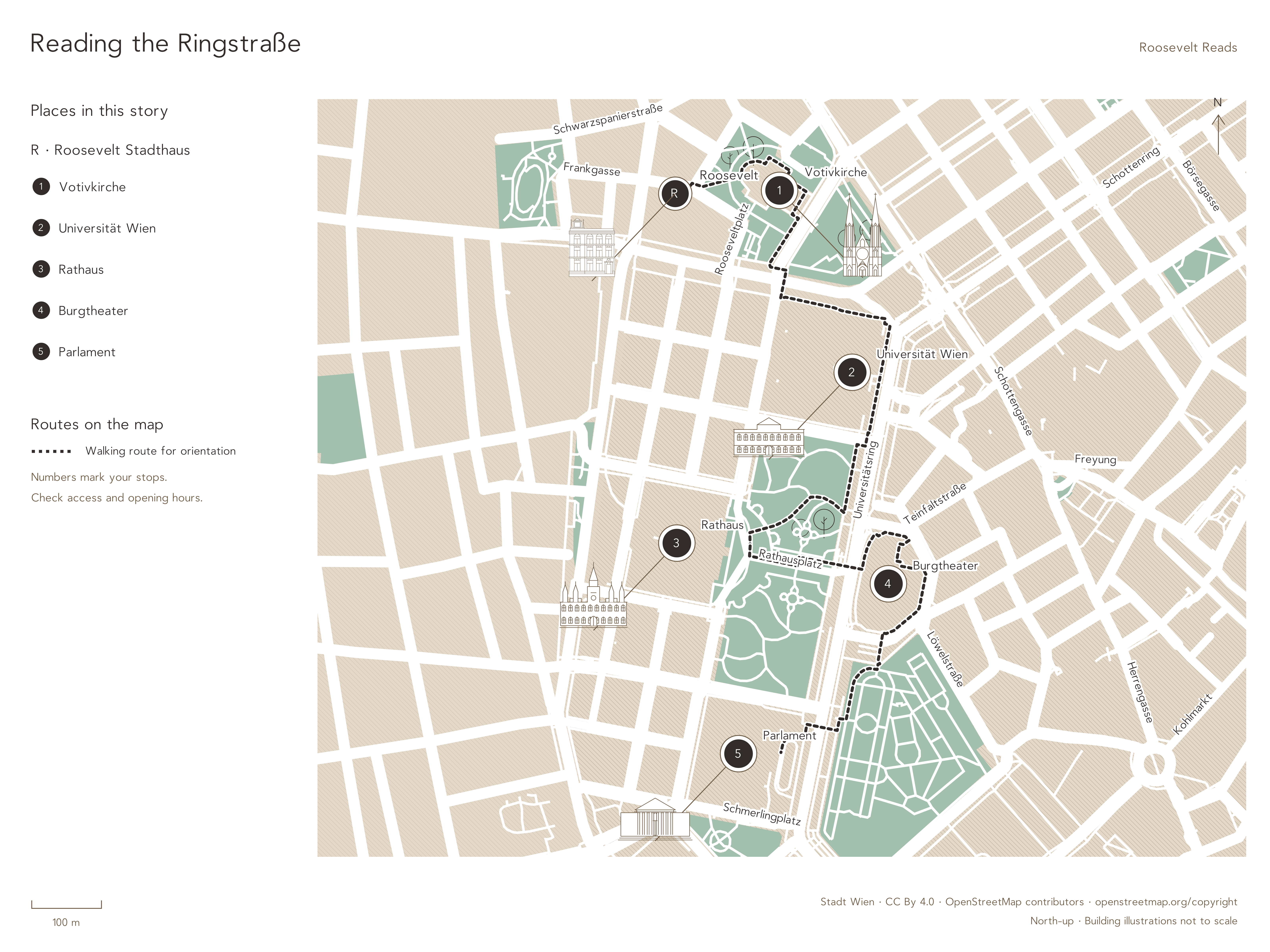
Plan this walk without trying to tick off the entire Ringstraße. On a first visit, it is more rewarding to really notice a few buildings than to photograph every monument in passing. Interior visits can complement the walk, but they are separate activities and should be planned according to each building’s visiting arrangements. The map marks the stops to help you find your way. Your own eye remains the best guide: which forms feel familiar, which surprising, and what image of Vienna emerges between them?
At a glance
Votivkirche → university → Rathaus and Burgtheater → Parliament. An architecture walk focused on the 19th century. Plan interior visits separately using official visitor information.
For your visit: Ringstraße and architecture.
Discover more: Discover Vienna · More Roosevelt Reads.


